Sounds of the Library
This page describes the Sounds of the Library, a digital musical instrument (DMI) developed by Avynne Trembly at Queen Mary University of London as a part of the Interactive Digital Multimedia Techniques Course in 2025.
Context

The initial idea behind Sound of the Library was inspired by the idea of turning a hobby into a DMI, as in Stitch: A knitting-powered Musical Interface using computer vision (Bosen et. al, 2024). The creation of Stitch was inspired by the author’s own hobby: knitting, and her desire to make music with it. I considered how I could use my own hobby of reading to create a new DMI. There have been examples of using literature as inspiration for NIMEs in the past, such as Live Writing: Reflections (Won Lee et. al, 2016). Live Writing used mapping to trigger sounds that correlated to different words being typed, as they explain in their paper, “In the process of plain writing, diverse input signals can be captured to generate and trigger sounds at different levels ranging from the laptop’s native physical inputs to the semantic meaning of the content written.” (Won Lee et. al, 2016). The idea of mapping sounds to match the semantic meaning of content is similar to my goal to create sounds based on what is happening within a story as you read it.
Concept
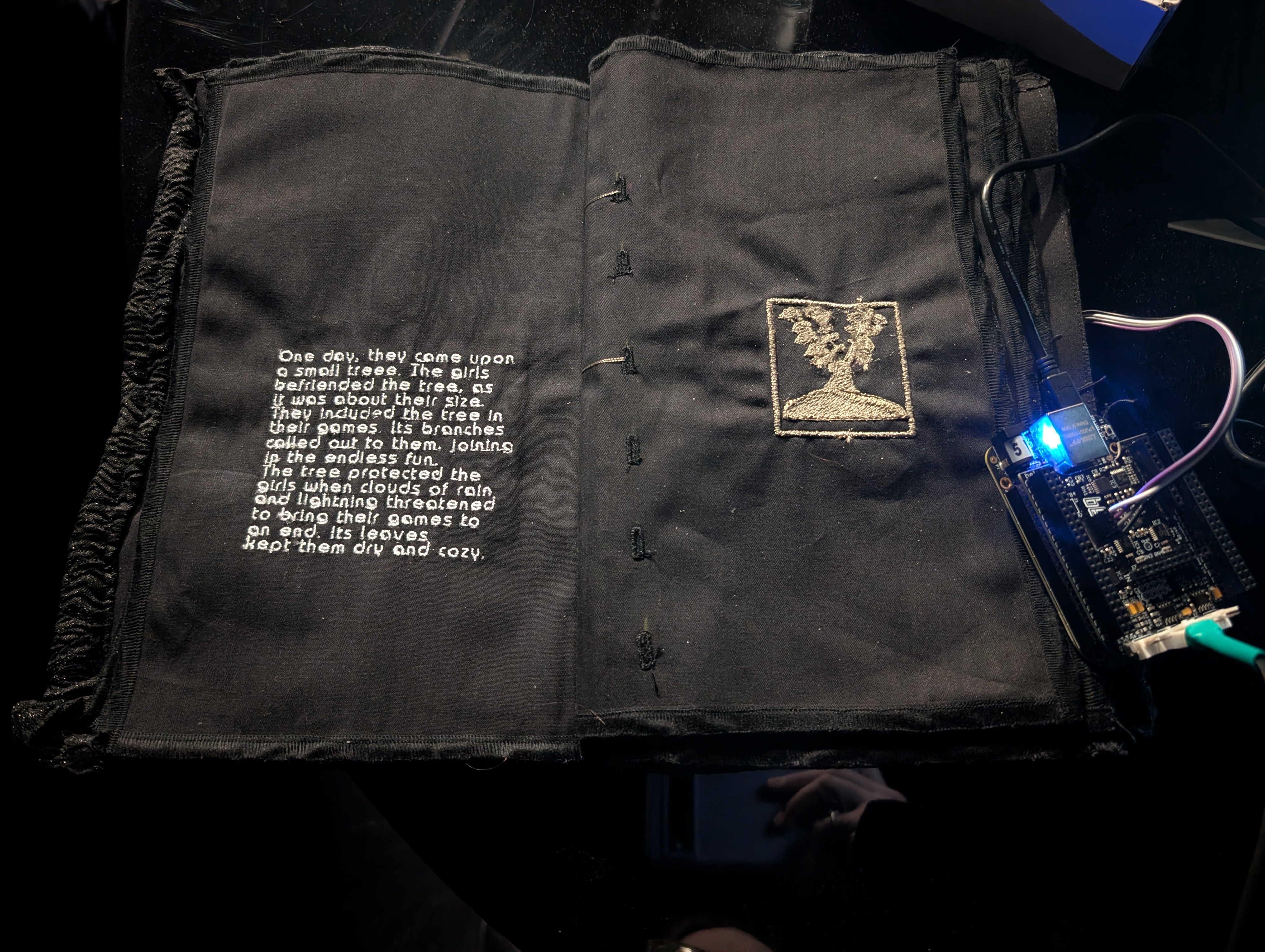
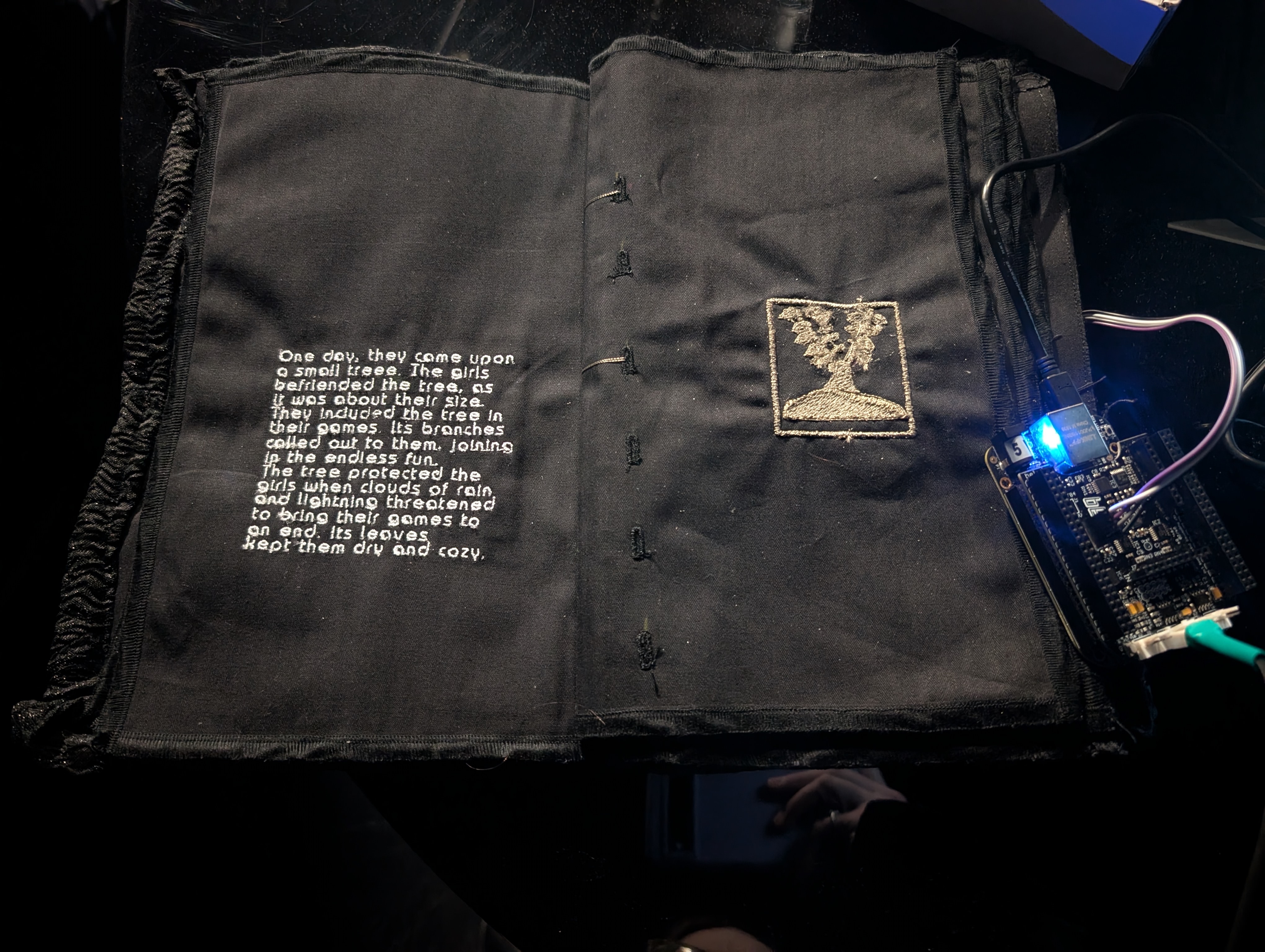
When designing my instrument, I originally considered several possibilities for how to map sound and physical performance to a story. I wanted the sound to accent and not distract from the story being presented, so I didn’t want the sound mappings to change the sound too drastically. I choose to focus on ambient sound, mapping to different ways to modulate the frequency of the sound. The instrument can still provide interesting sound qualities based on differing levels of reverb. I also chose to focus on building a physical book with sensors incorporated into the book as illustrations to be a part of the story.
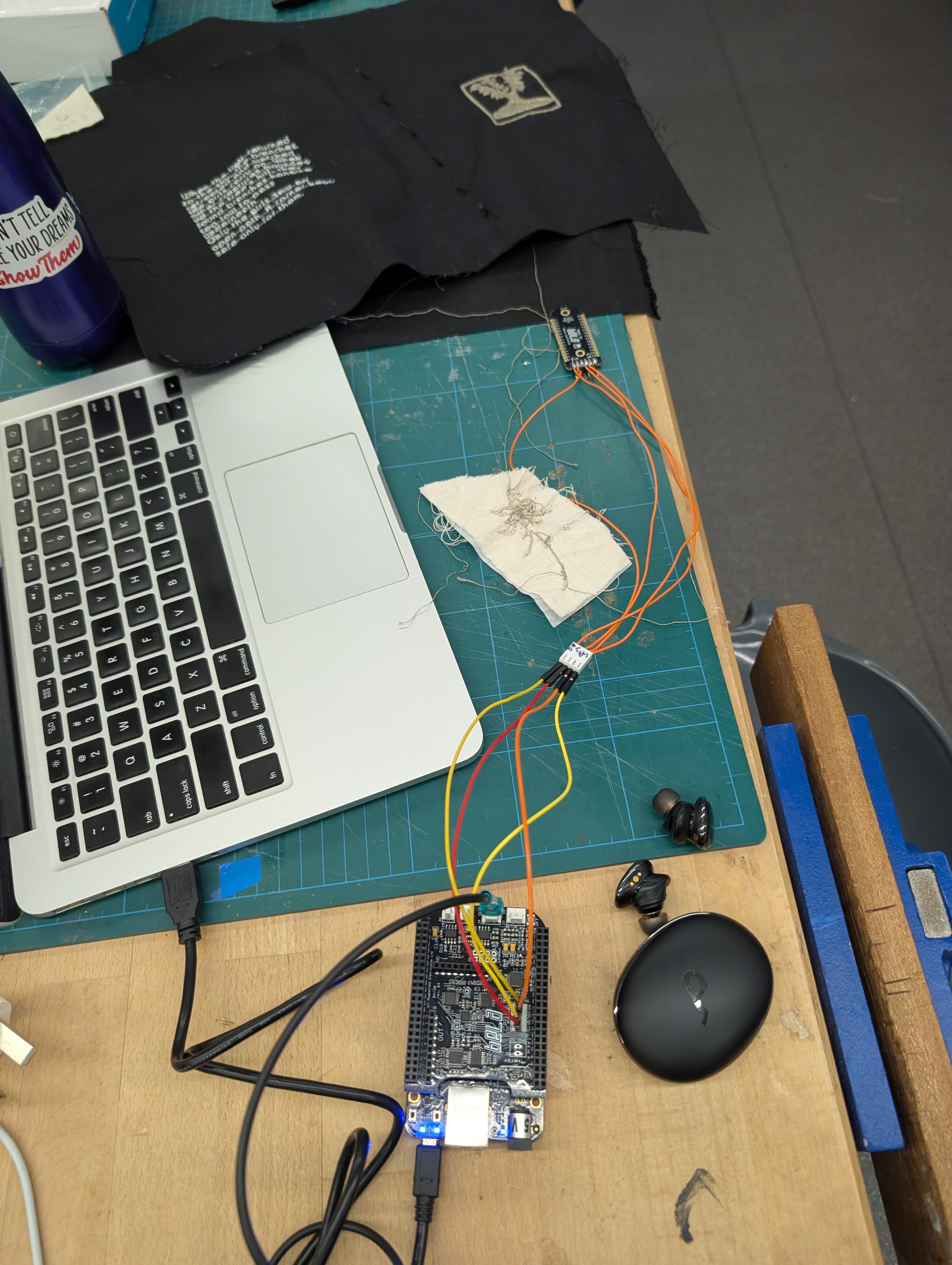
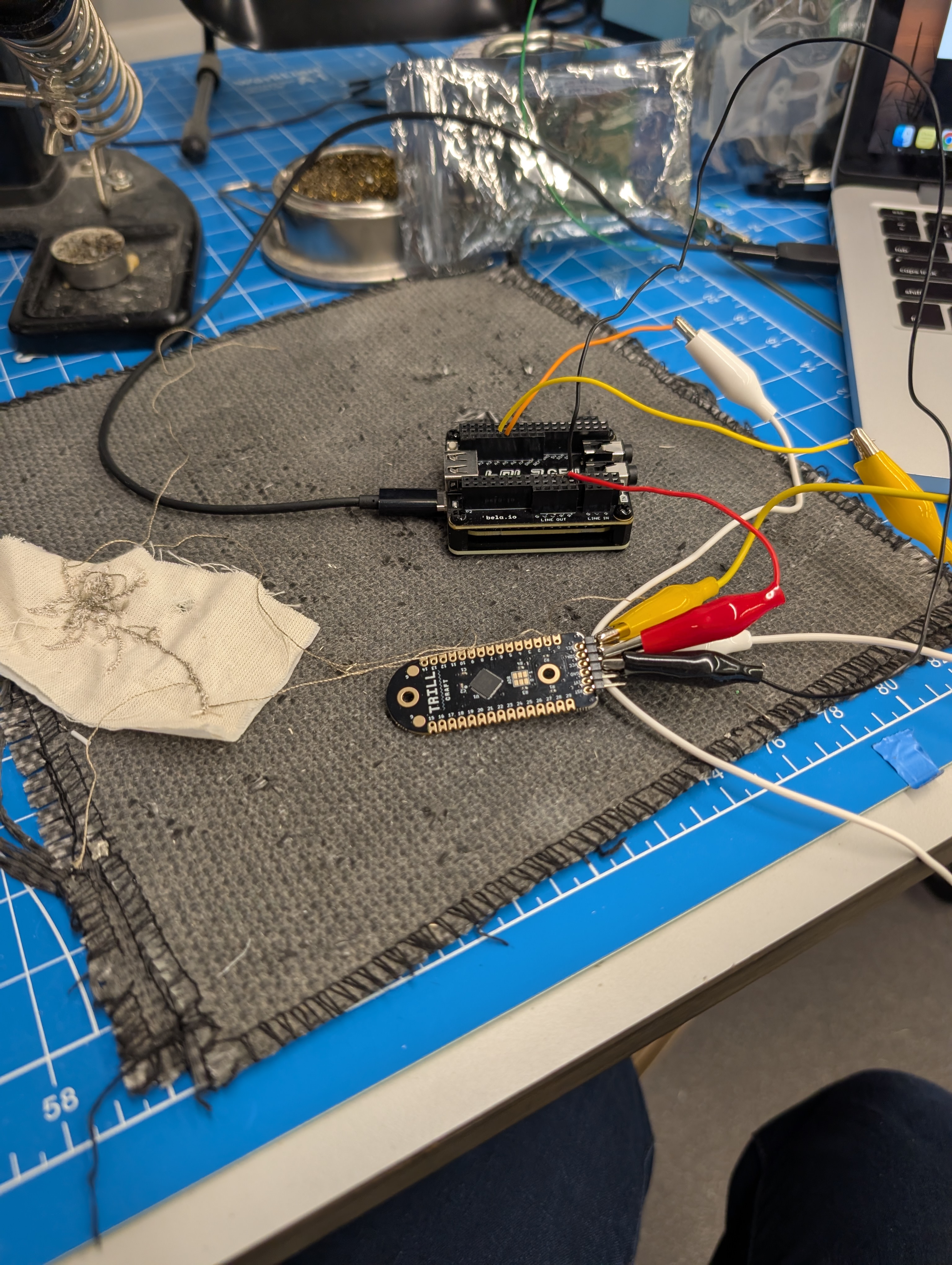
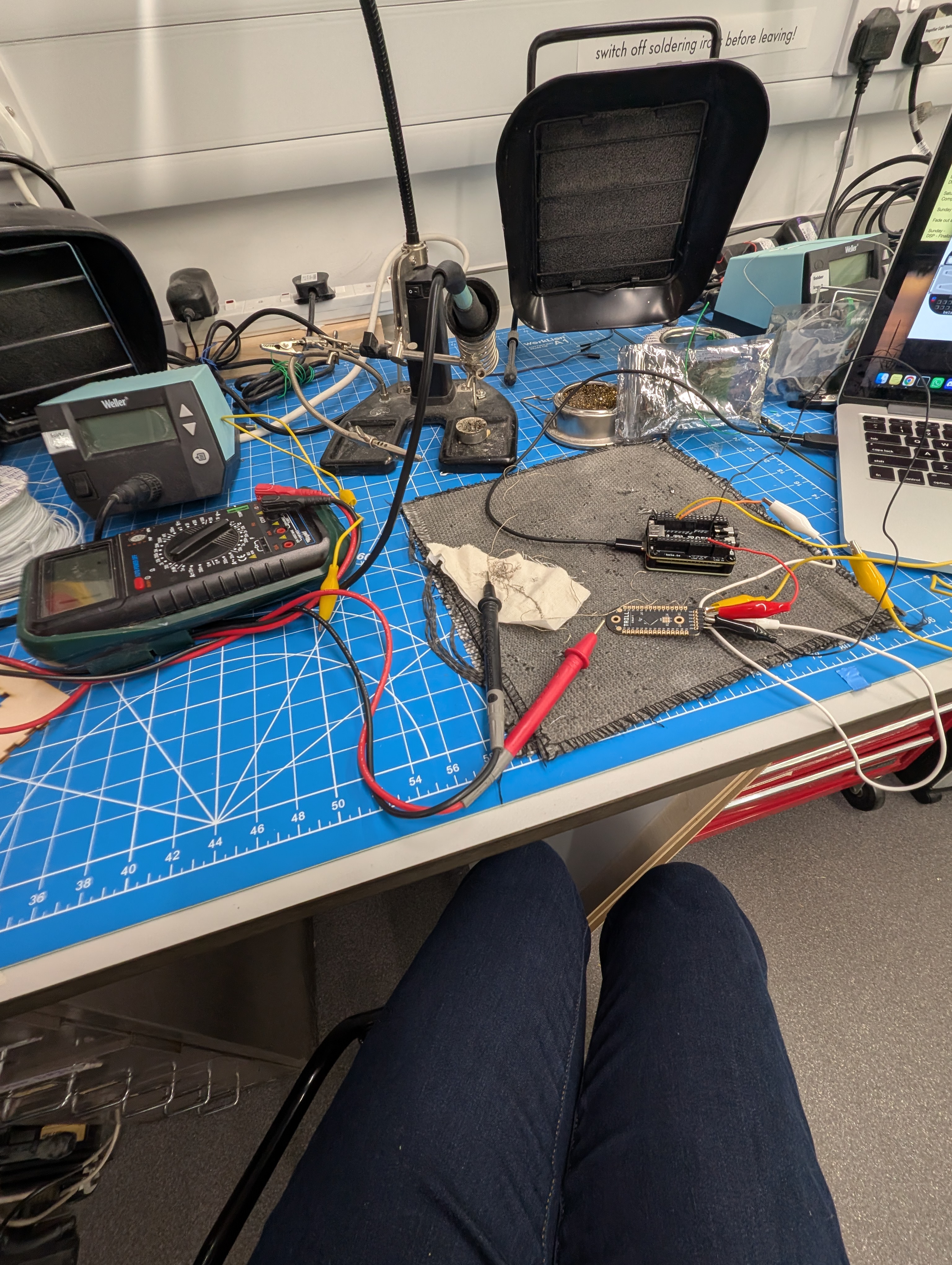
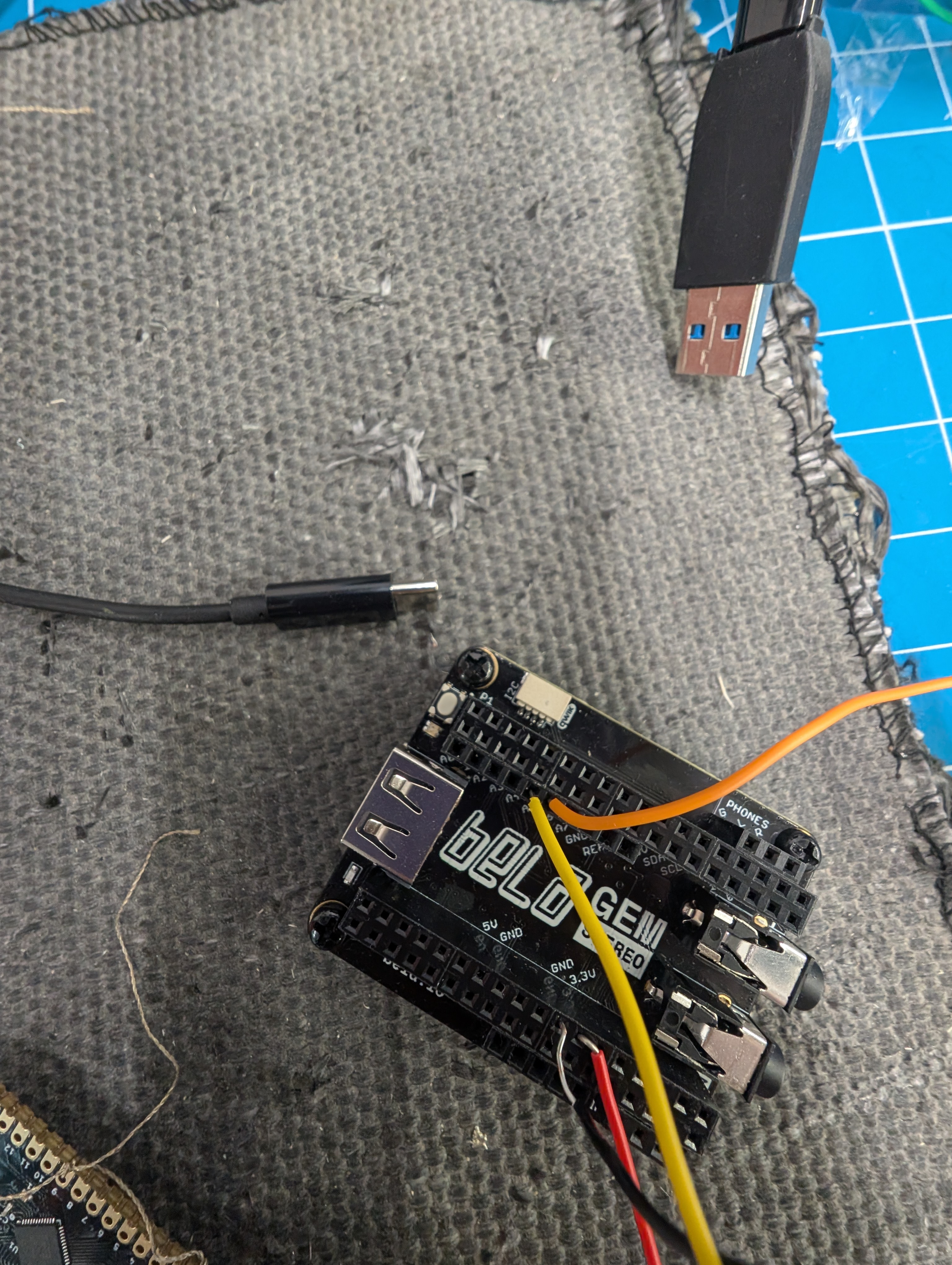
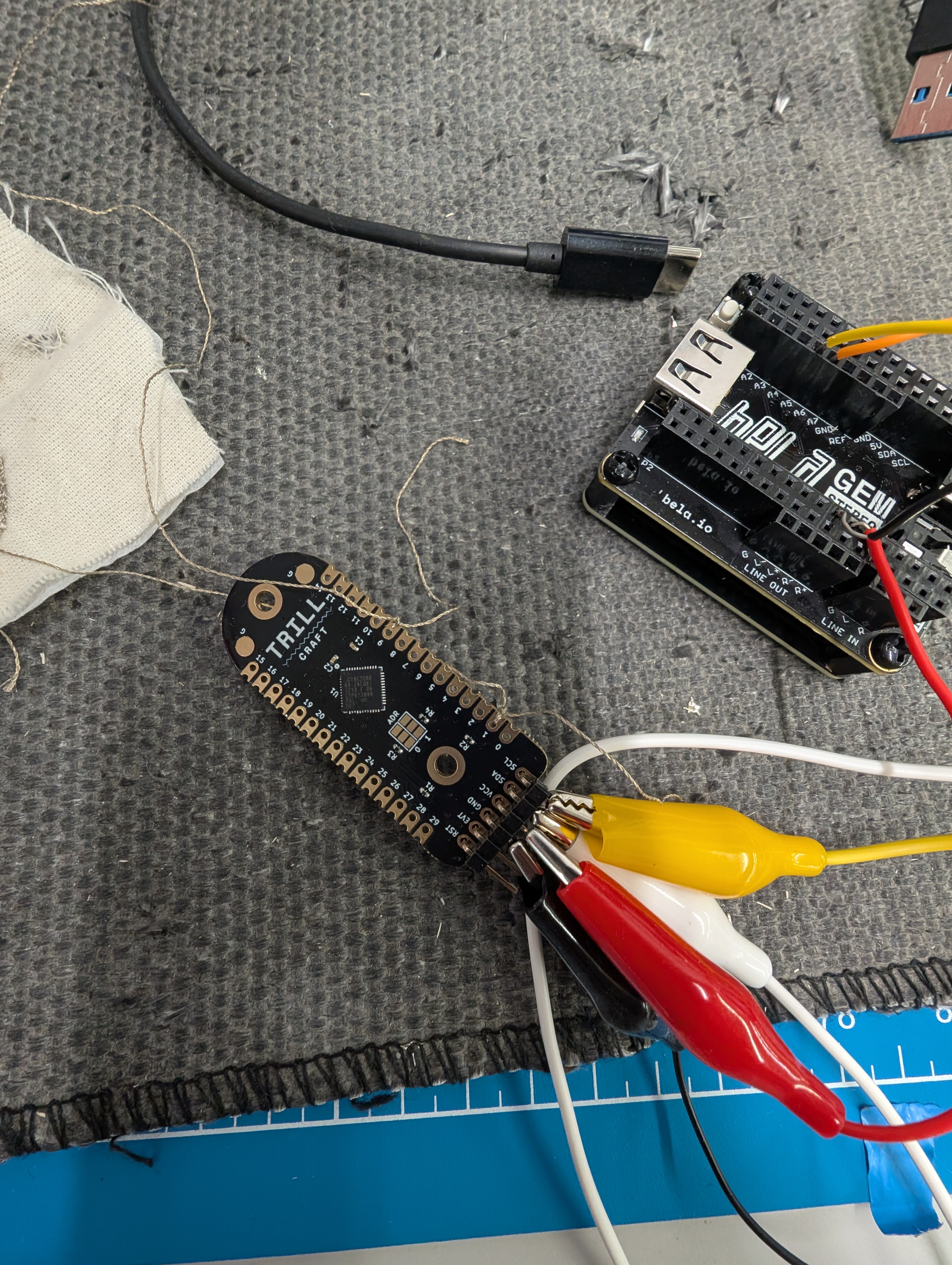
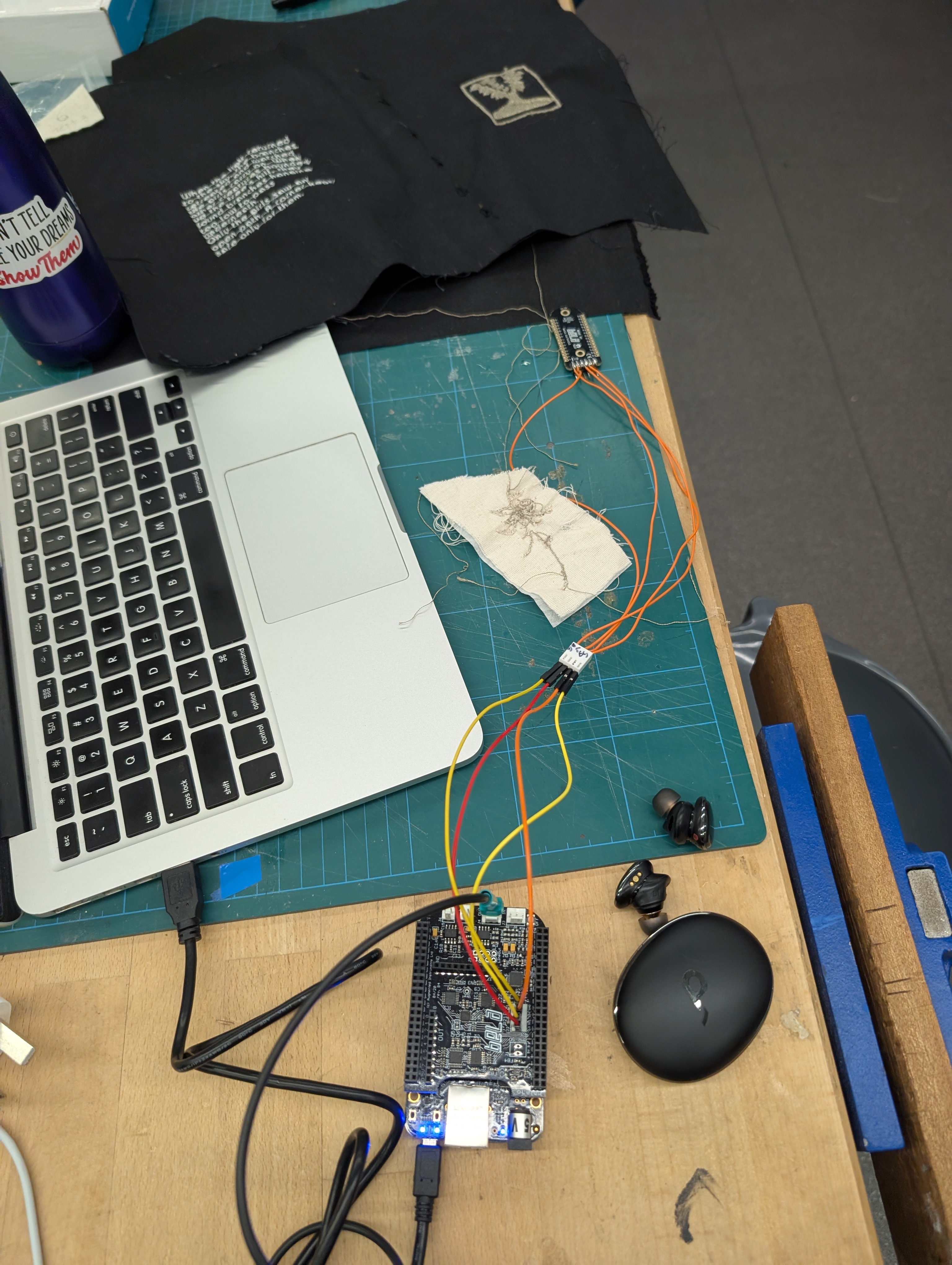
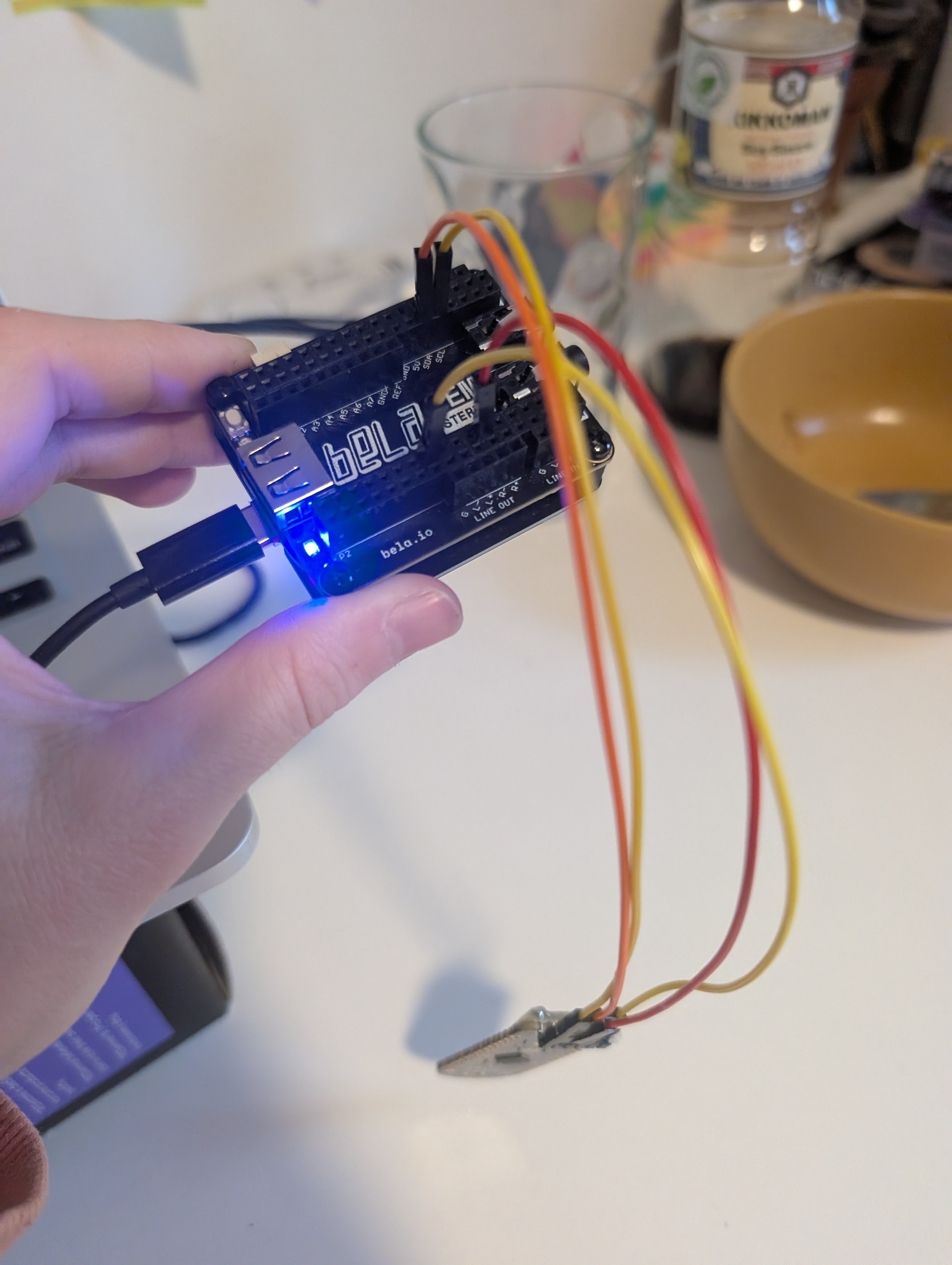
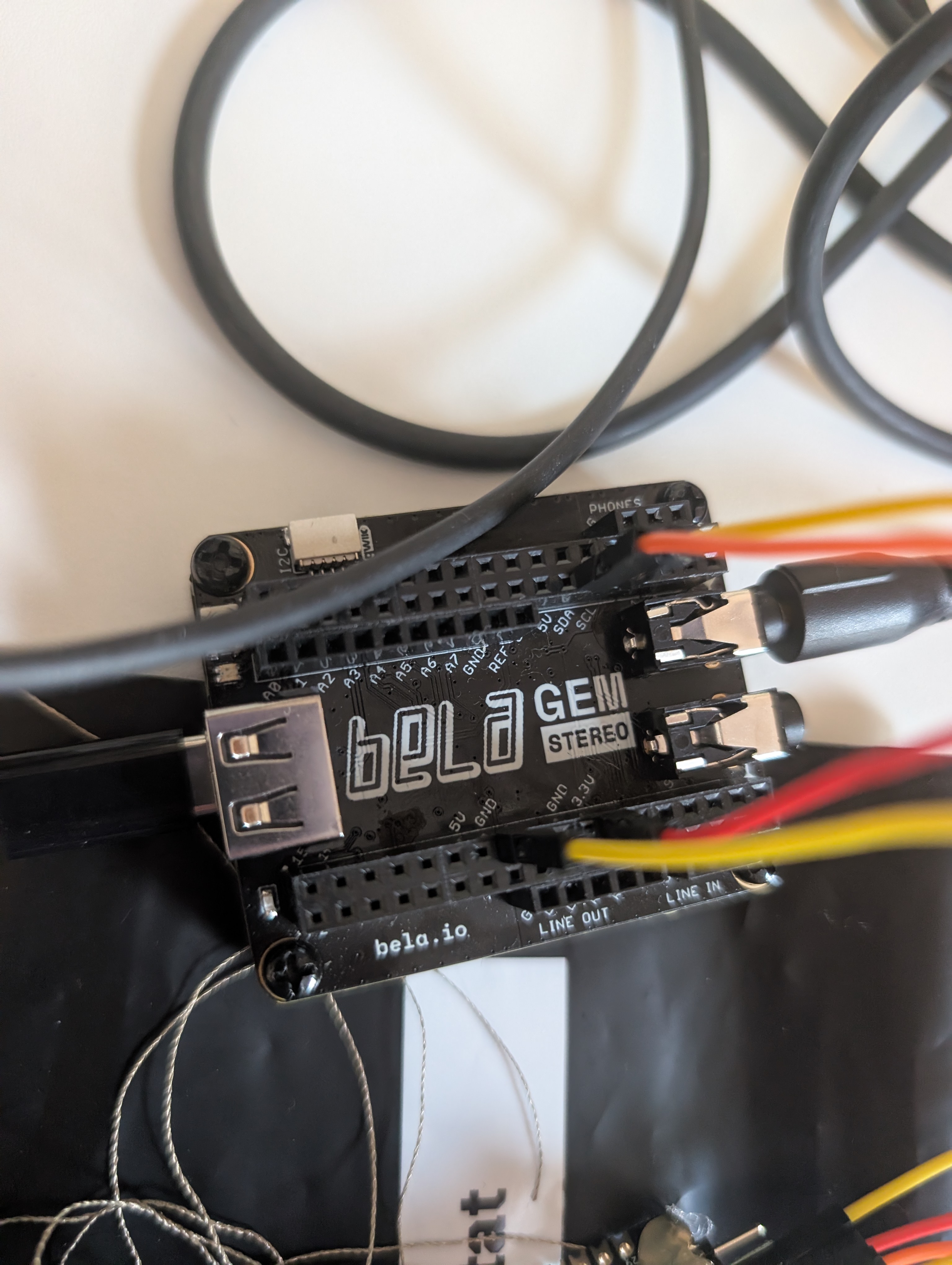
This image shows the testing of a single page and an extra sensor with the Trill Craft and Bela board.
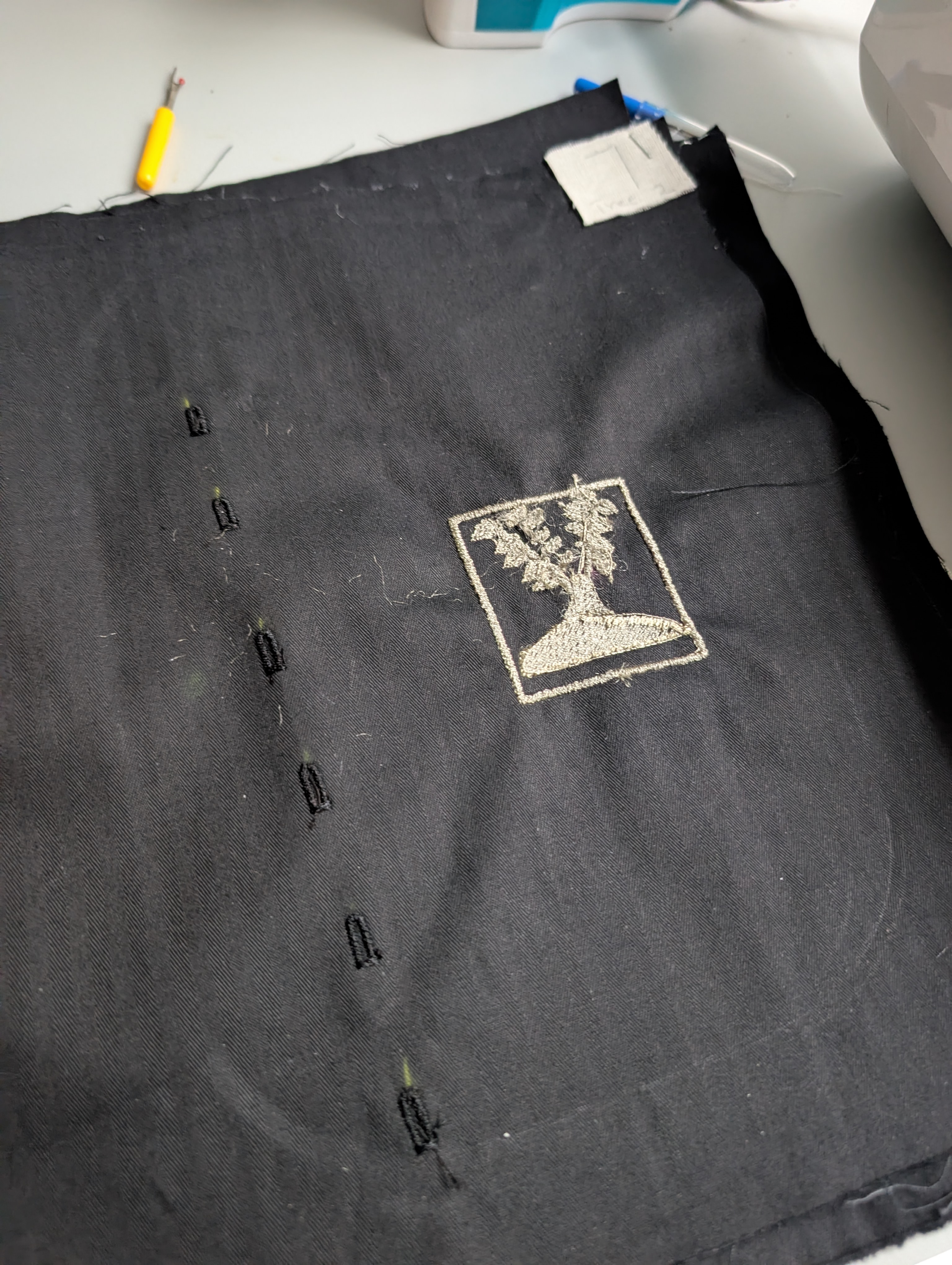
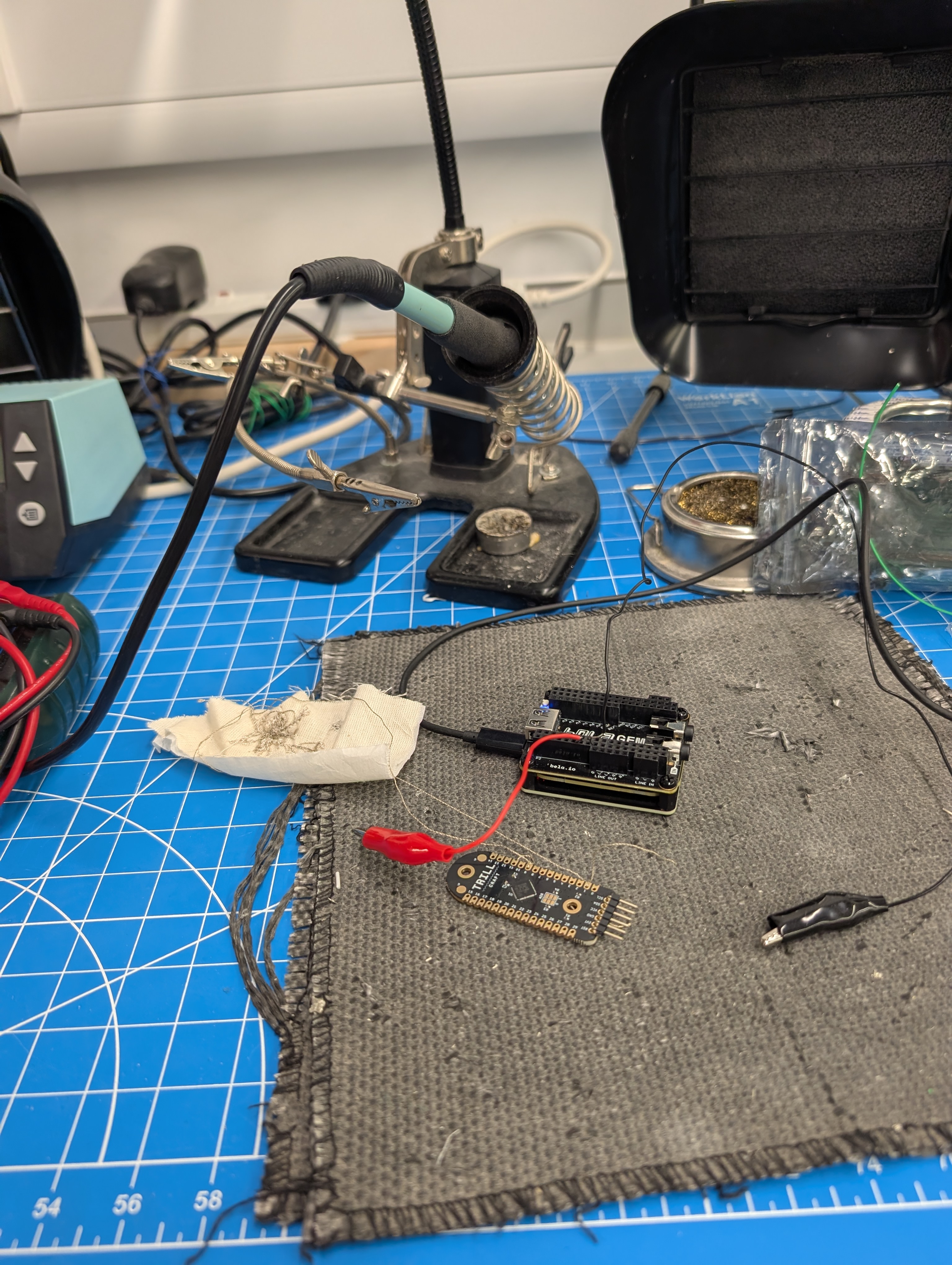
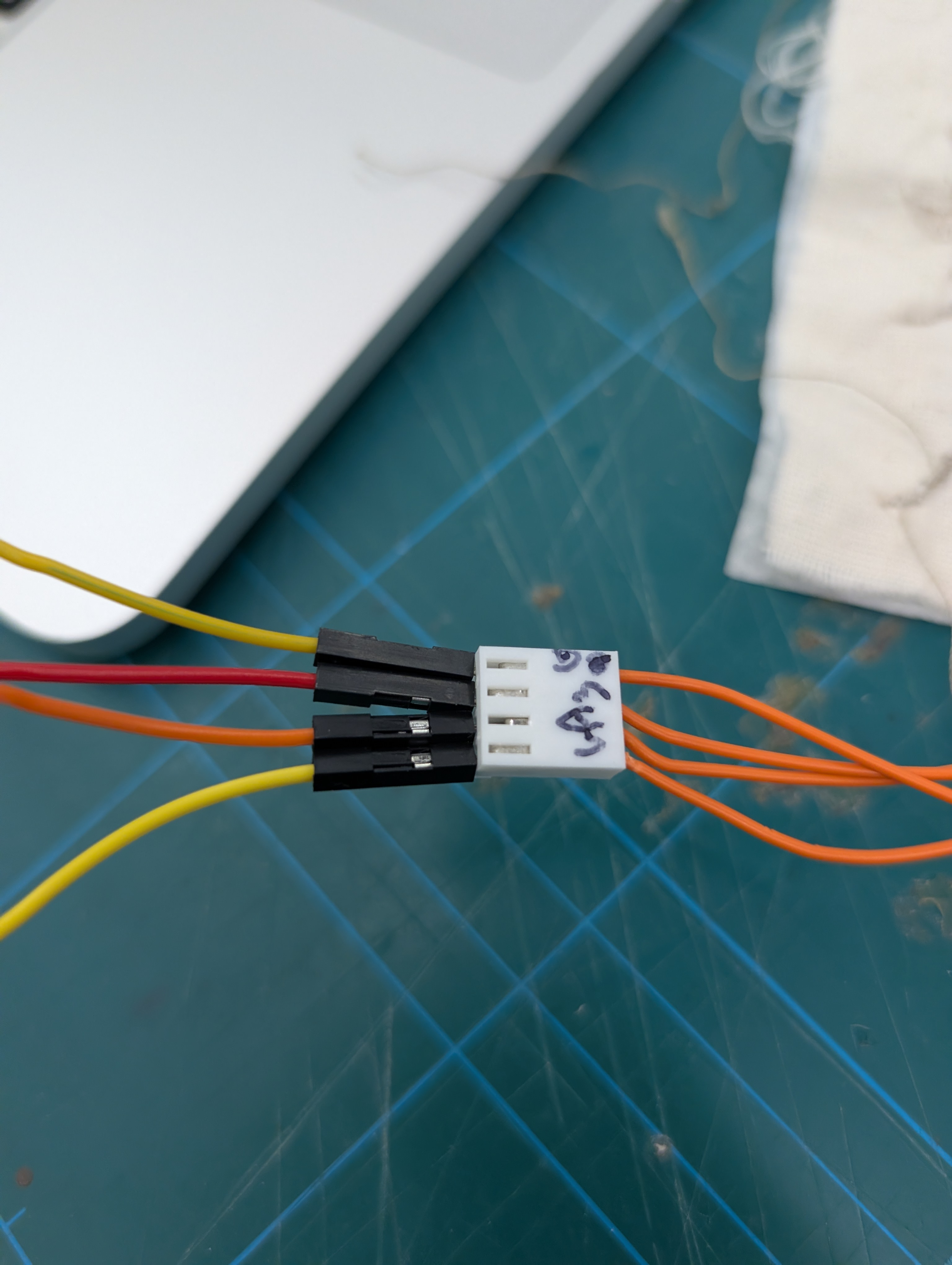
This image shows the testing of a single page with a sensor.
Motivation
My favourite part of reading as a hobby is the feeling of being fully immersed in the story. In order to achieve this immersion, I have often listened to background music that matched the theme of a book to enhance the storyline, which is an experience I sought to share with others through this DMI. To achieve this, I first considered the act of reading aloud and how that could relate to my DMI. Reading aloud stories is a long tradition across cultures throughout the world. Sharing stories in this way with children, for example, has been scientifically proven to increase reading and comprehension skills in children aged 3-10 (Batini et. al, 2024). This instrument seeks to add another layer of interest to the story being read, either aloud or silently, by associating sounds with themes and characters in the stories.
Aims
The aims for this project were to create a book which had at least two sensors that generated ambient sound to complement an original story. Based on findings that reading aloud and interacting with shared stories were important for children, specifically, I wanted the instrument and story to be accessible to younger audiences. In order to meet this goal, I needed to ensure that I had sensors which were easy to manipulate and able to be incorporated into the story. I aimed to create a sound that would both complement the story and the performance of the book without the story.
Design Process
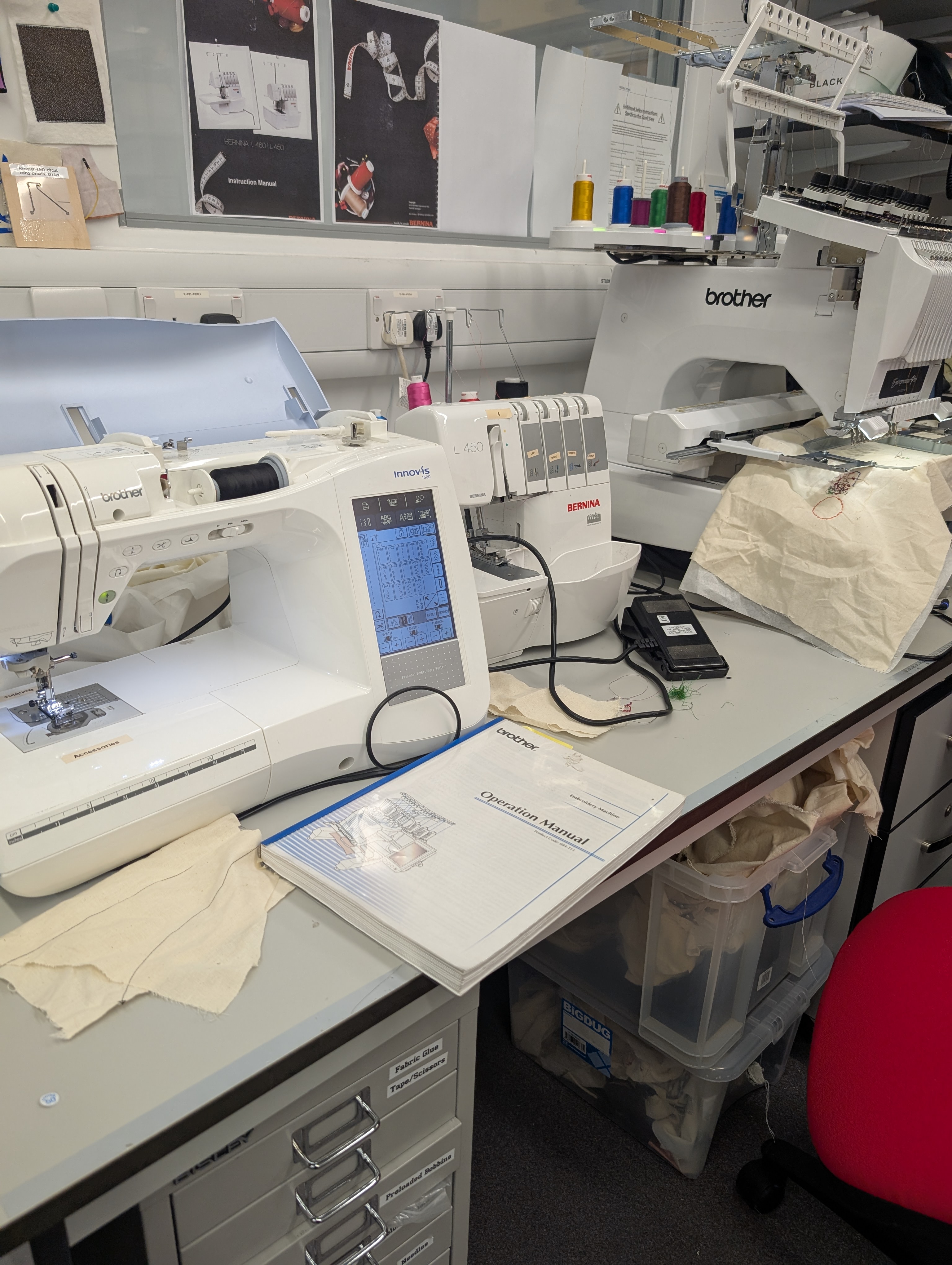
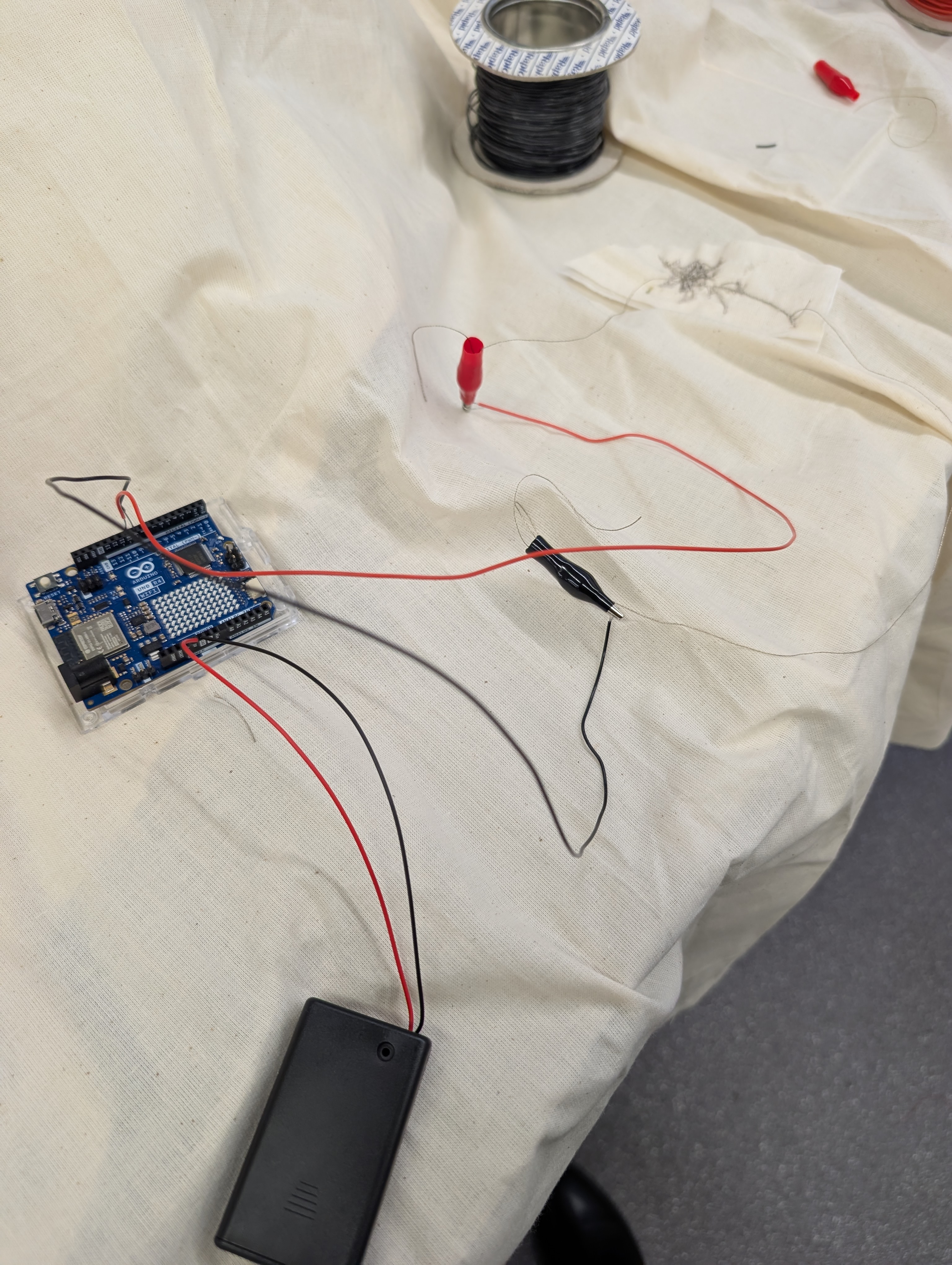
When approaching the design process, I was inspired by the problem-solving approach to creating NIMEs, as discussed in Insights Into How Digital Luthiers Approach Design (Renny et. al, 2024), where it mentions starting with “The user interface – its layout later determines the functionality”. I began by designing how the layout of the instrument could look and feel like a book for the user. I decided to construct a book out of fabric to account for durability and playability. I designed this book to use conductive thread, similar to other NIME instruments such as Aural fabric: Greenwich (Milo, 2017). This was a suitable choice because I had the technical skills to produce this instrument (sewing), and it enabled me to have more creativity when designing my sensors, as I could embroider any image I wanted. As I constructed how the book would feel, I mapped how the sensor’s shapes and sounds would reflect the story.
For more information on my design process, see the technical report here.
See the pattern for sewing the fabric book here.
Download the Pure Data patch here: https://github.com/MusicTech2130/Sound_of_the_Library/tree/main
Reflection
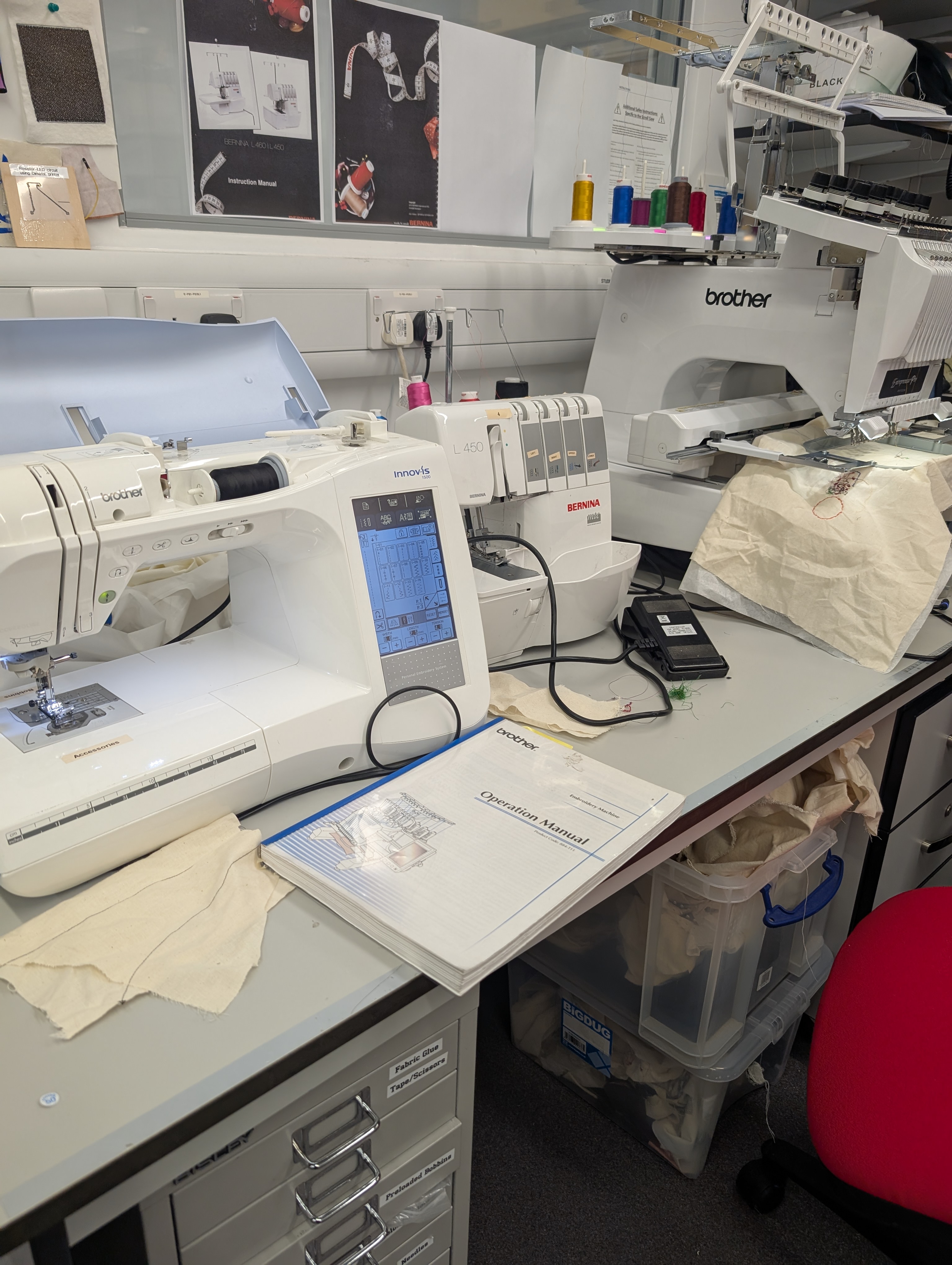
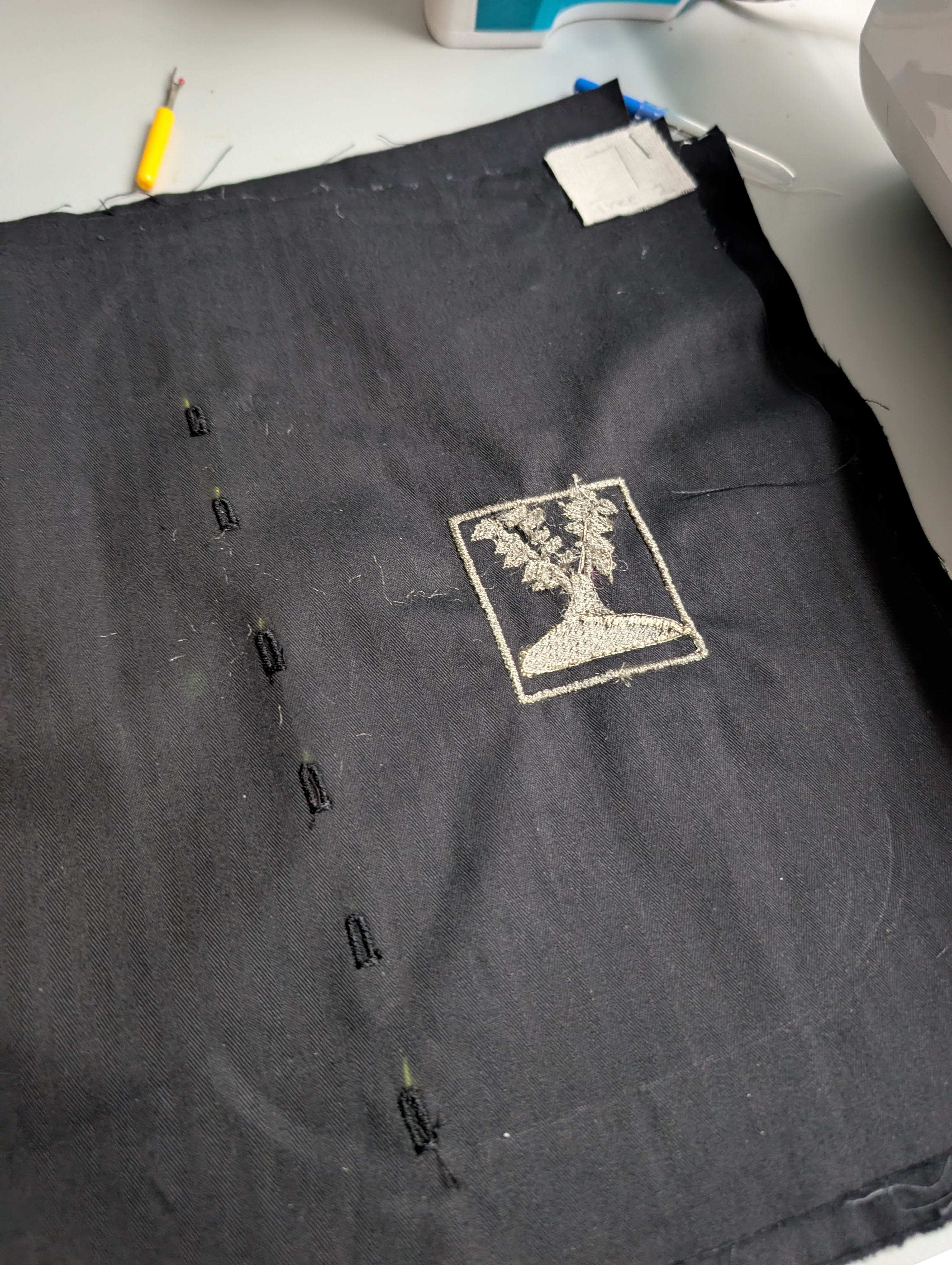
Based on my initial goals, the end product of this project was a success. It did produce ambient noise from three patches triggered within a book. I faced several challenges throughout the design process, but I was also able to succeed in using fabric and sewing techniques effectively. The largest challenge I faced was embroidering the conductive thread, which is much thicker than traditional thread, so machines struggle to embroider it correctly. I redesigned the sensors several times before one of the designs was completed. Through this process, I learned about how to optimise designs for embroidery machines.
Another challenge for me was learning Pure Data programming and the Bela platform. I have gained a lot of skills in creating Pure Data patches and testing with the Bela boards to produce a specific sound. One of the issues while developing the patch was that the Bela platform does not automatically have all the same objects as Vanilla Pure Data.I had to import several abstractions into the Bela IDE to make the reverb object work.
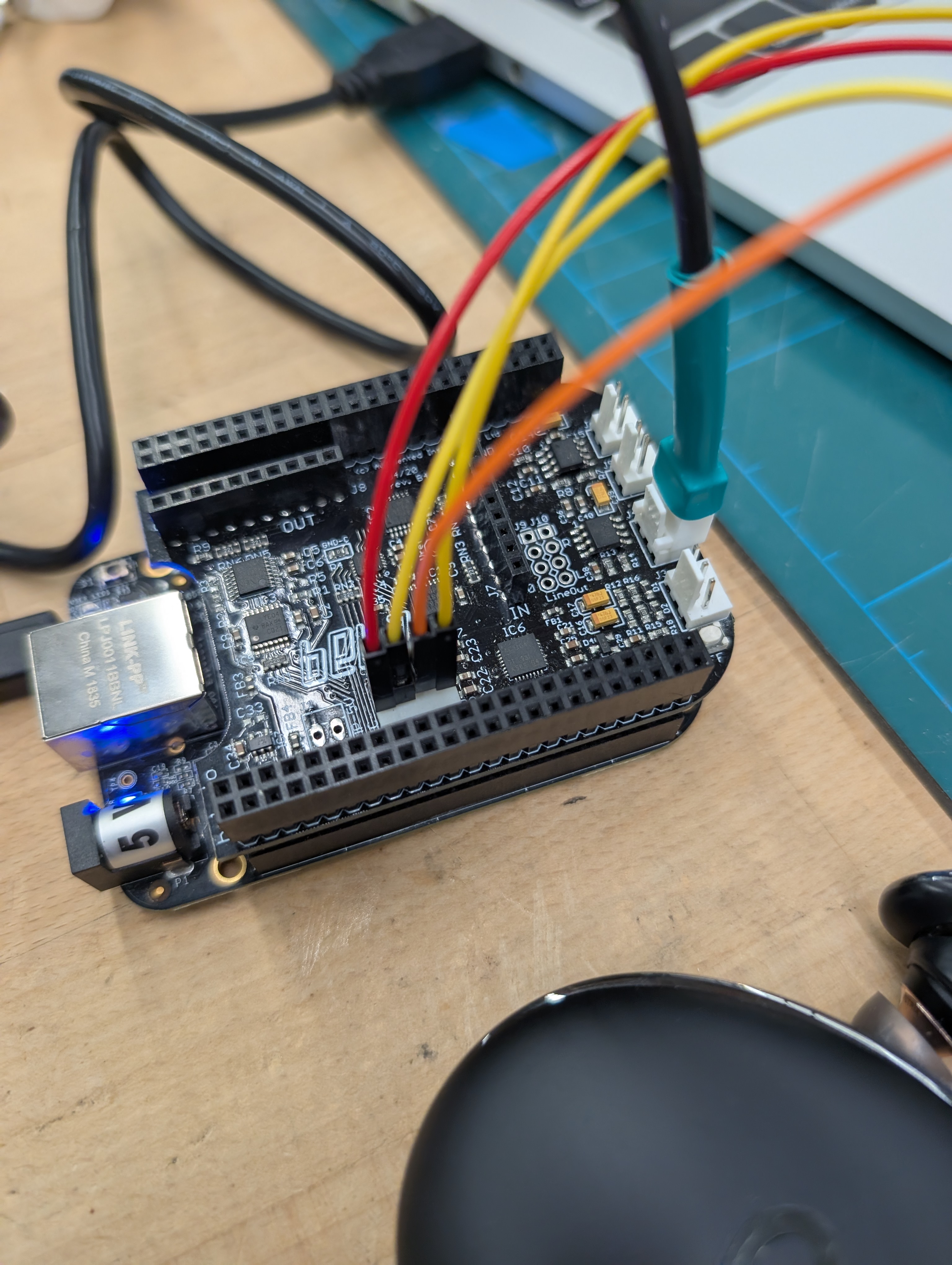
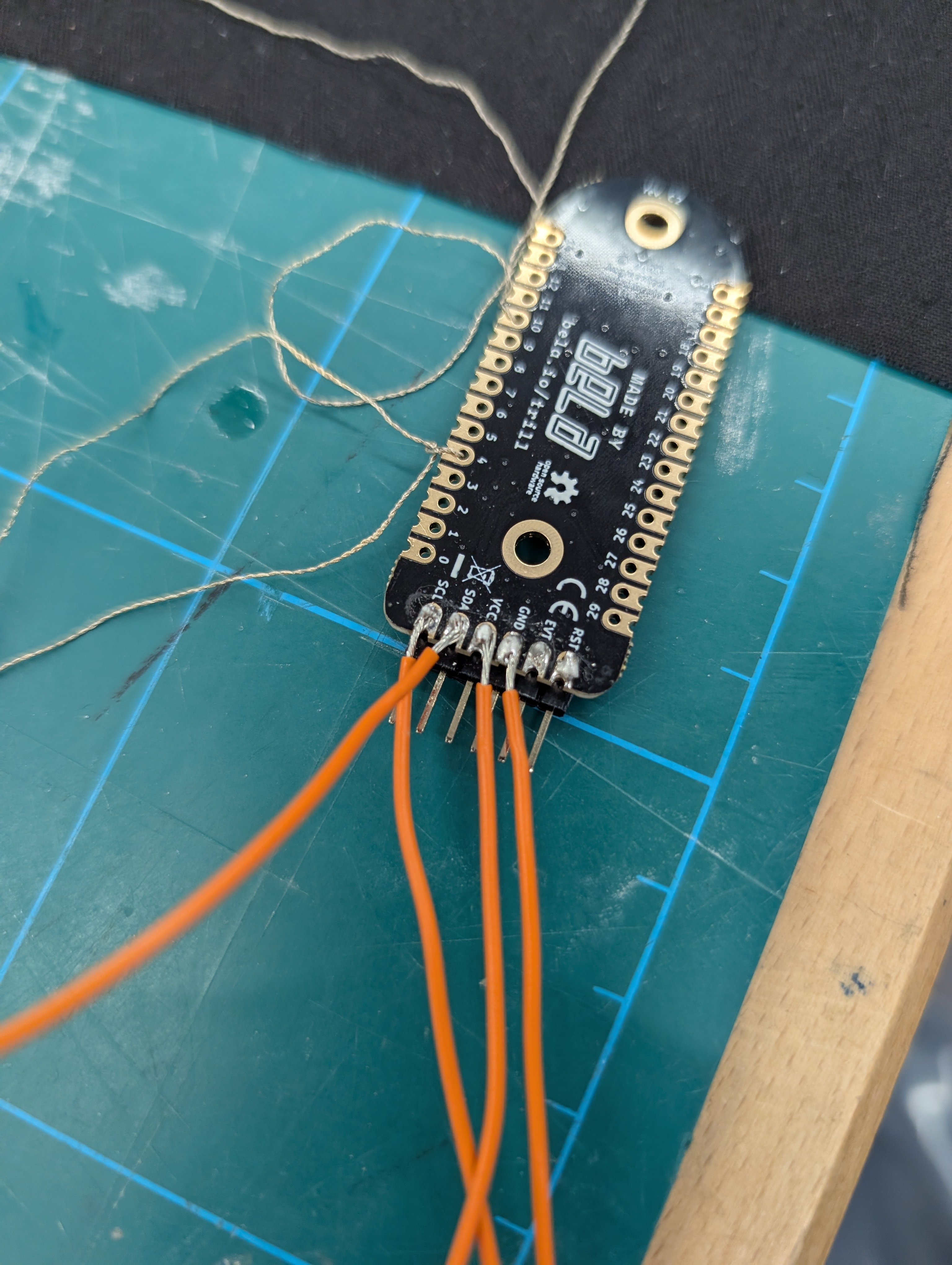
I gained many skills in electronics as I had to research the makeup of the Bela board and understand the different purposes of SLA, SCL, and I2C inputs to ensure that the wiring was correct. I also learned about the benefits of multi-core wiring compared to single-core wiring when having issues with dry soldering.
If I continue to develop or perform this instrument in the future, I would like to research more about conductive thread and the best types available for my project. I would also explore incorporating other types of sensors into the book, such as conductive fabric or buttons that could add new levels of sound manipulation.
Despite the challenges, I greatly enjoyed my experience of building this DMI and would like to spend time in the future expanding on it. I believe this could contribute to a new way of enjoying story and performance, both inside and outside the community of NIME.
Gallery
To view videos about Sounds of the Library, see this YouTube playlist.
To view a demo of Sounds of the Library, click here.
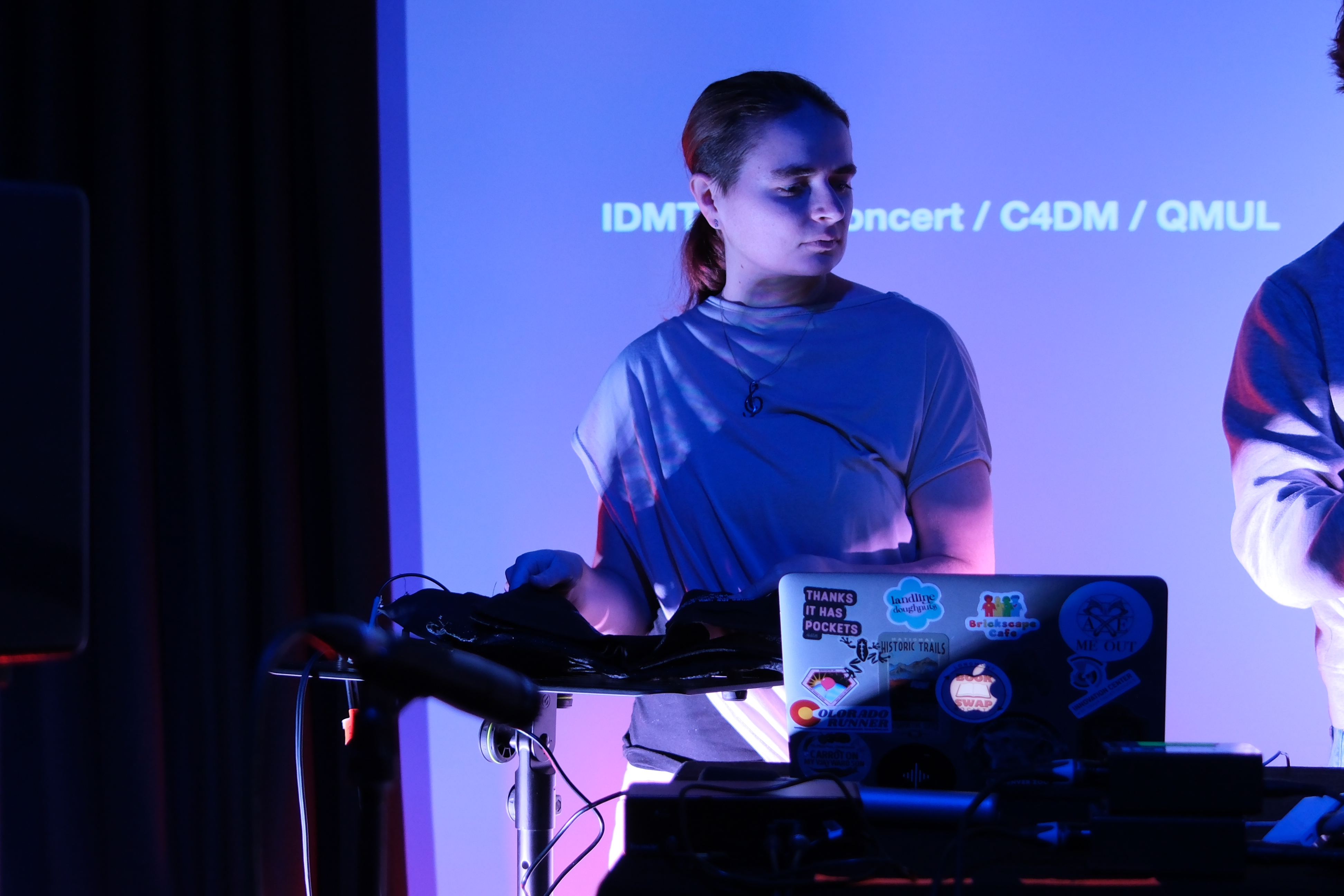
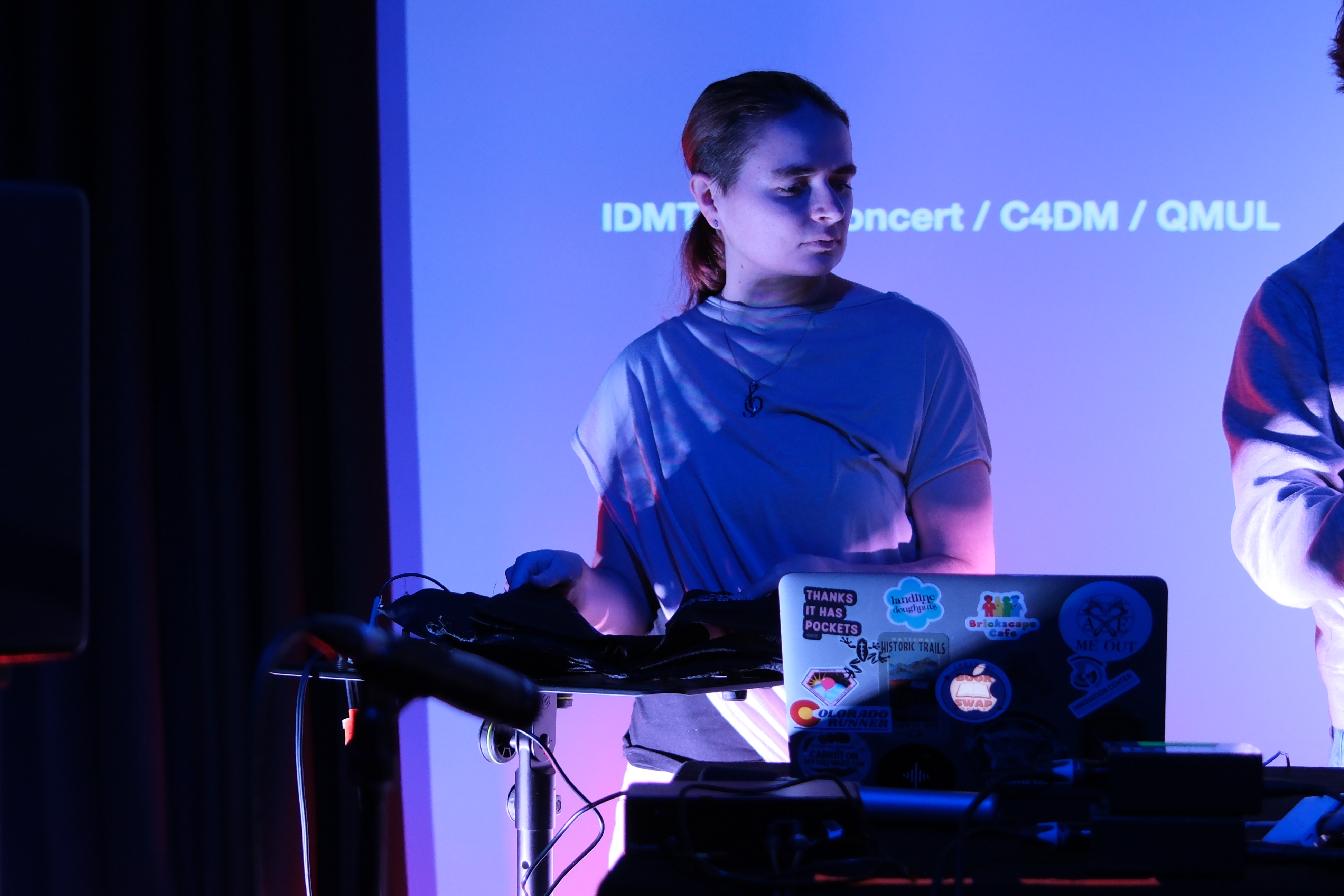
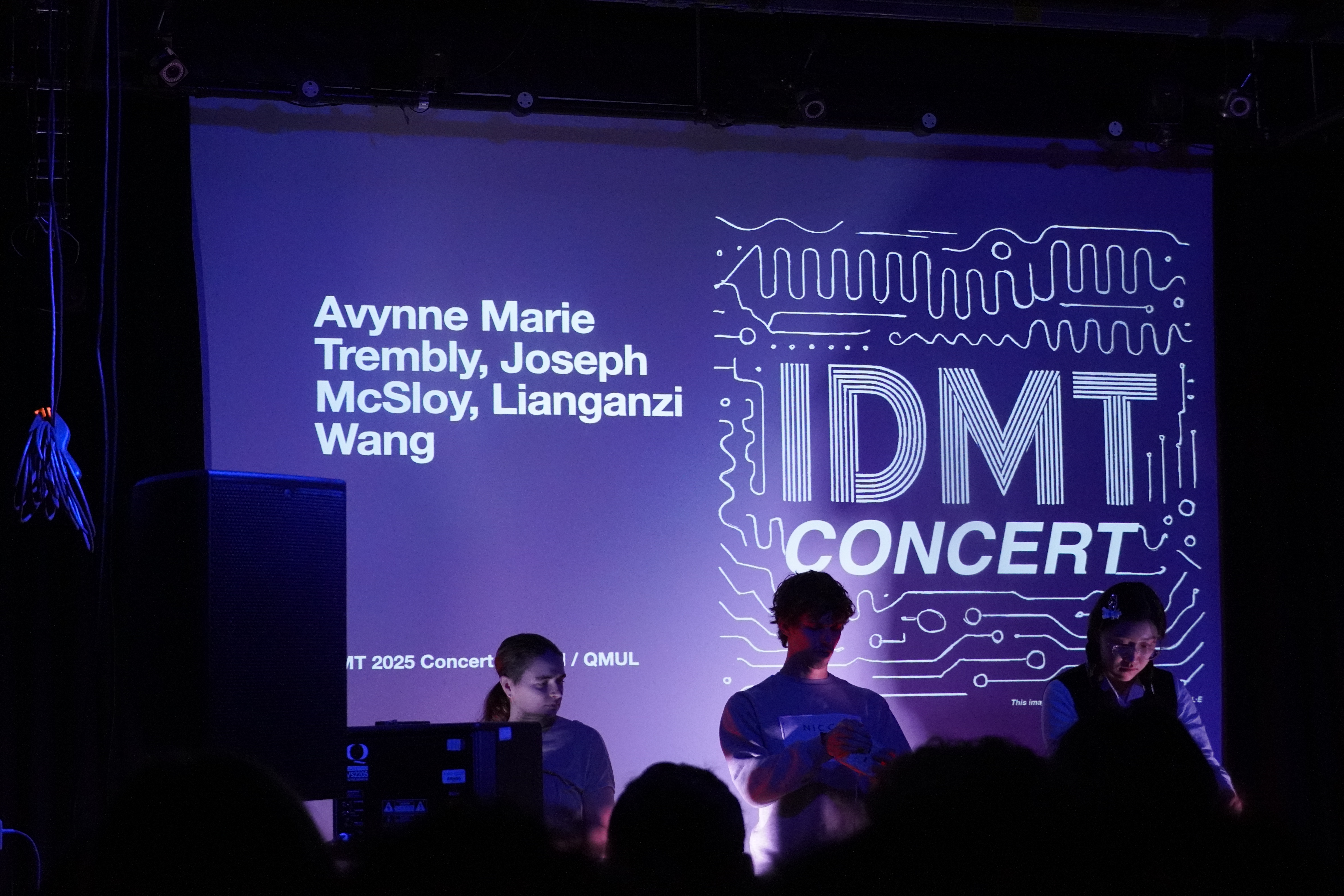
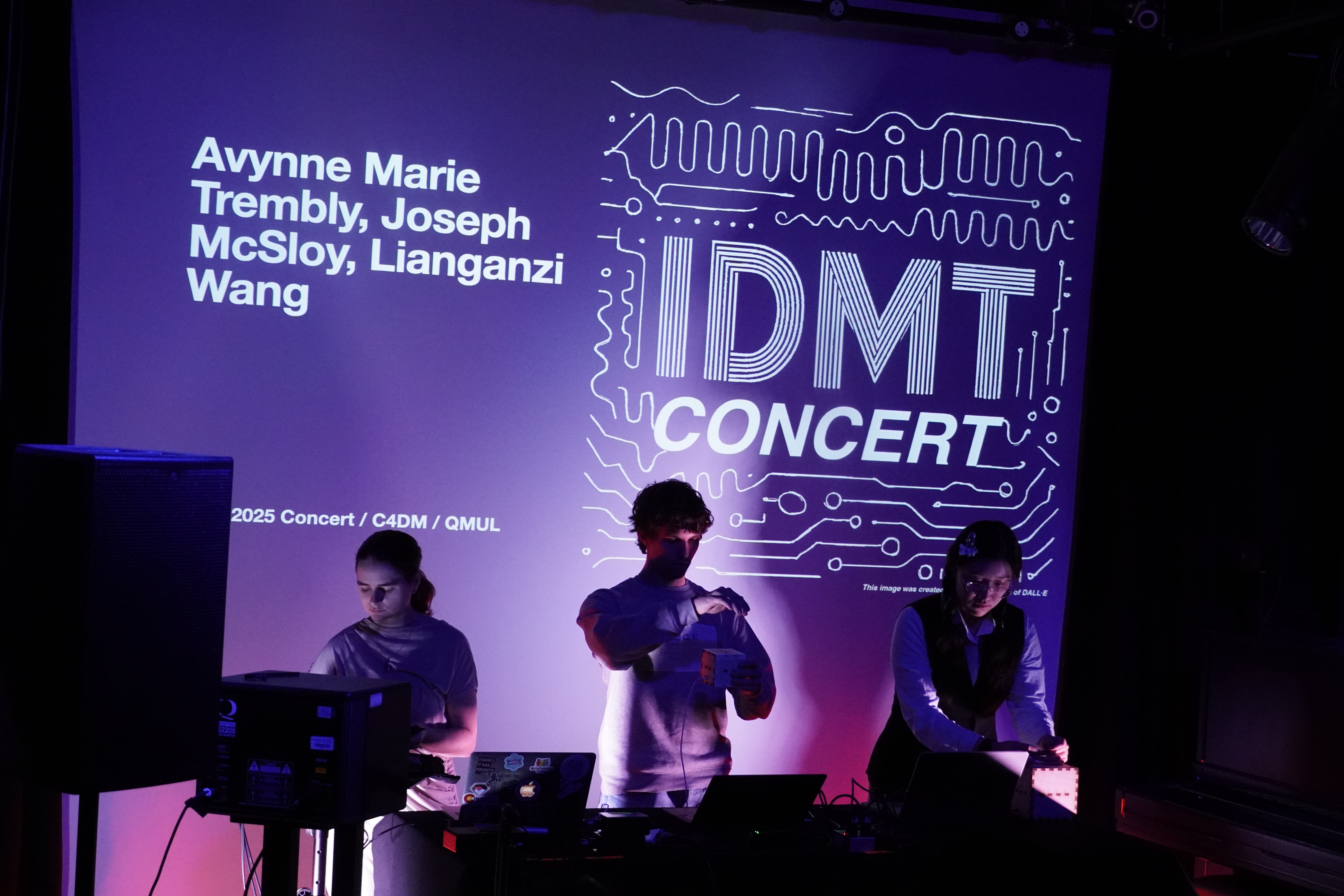
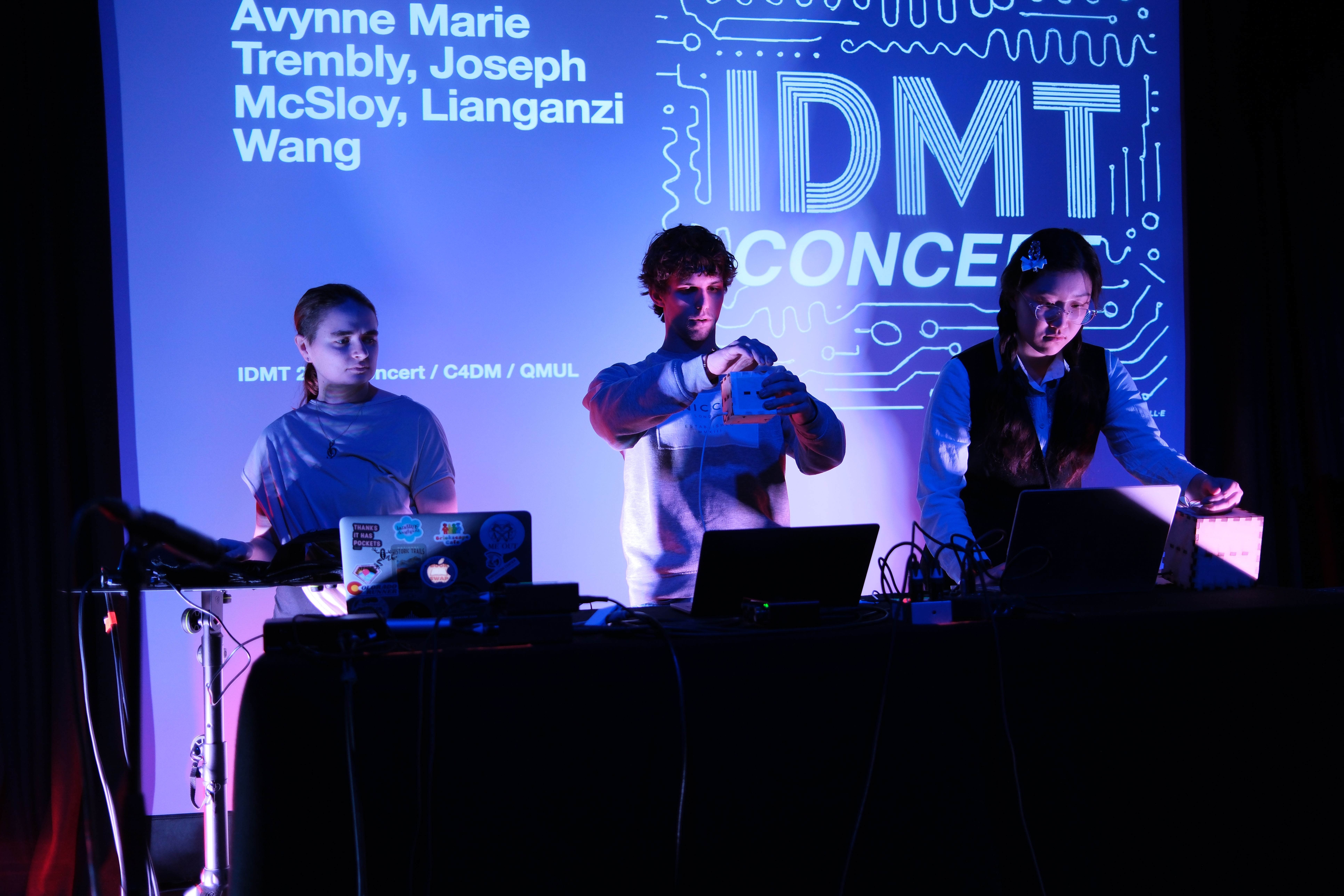
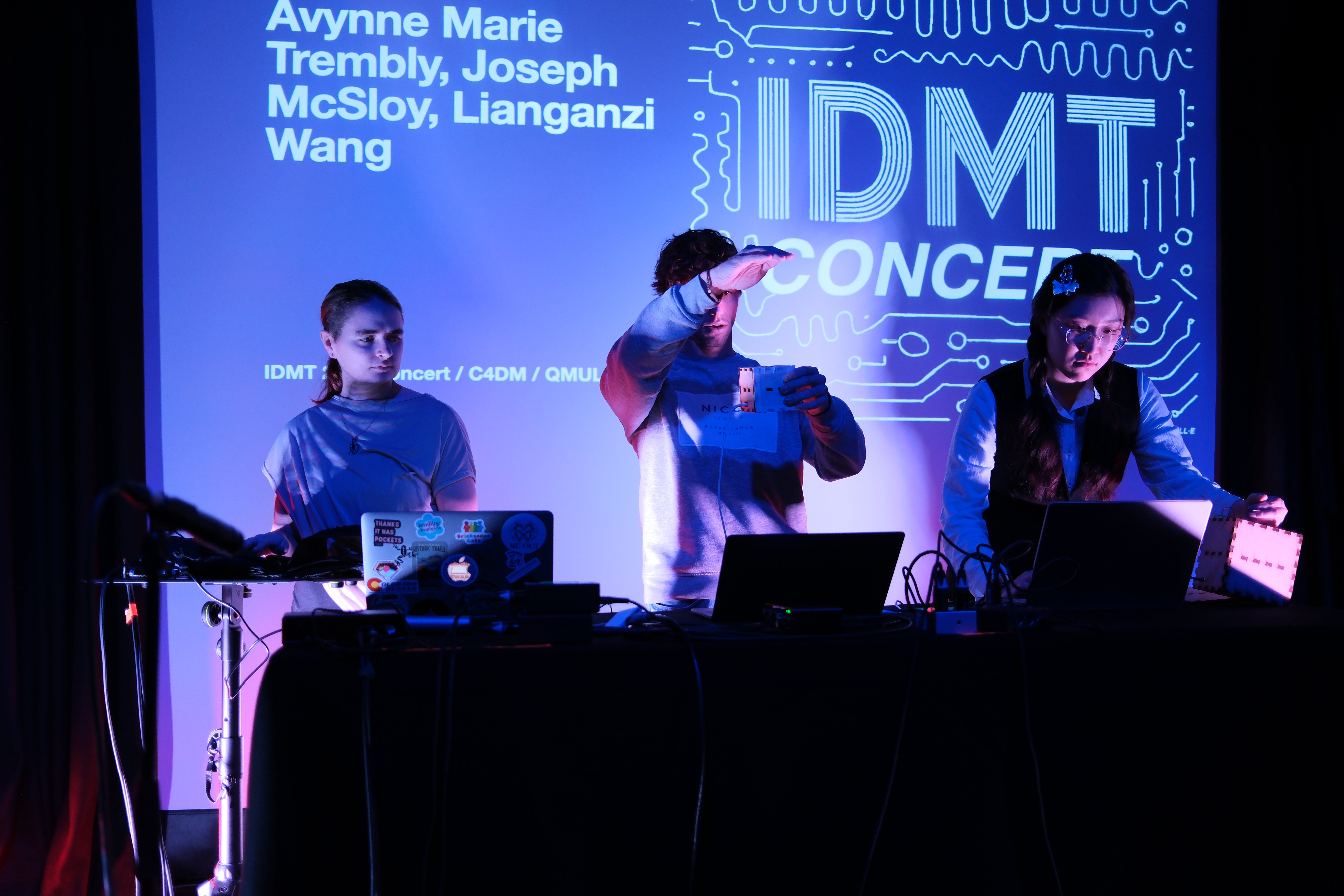
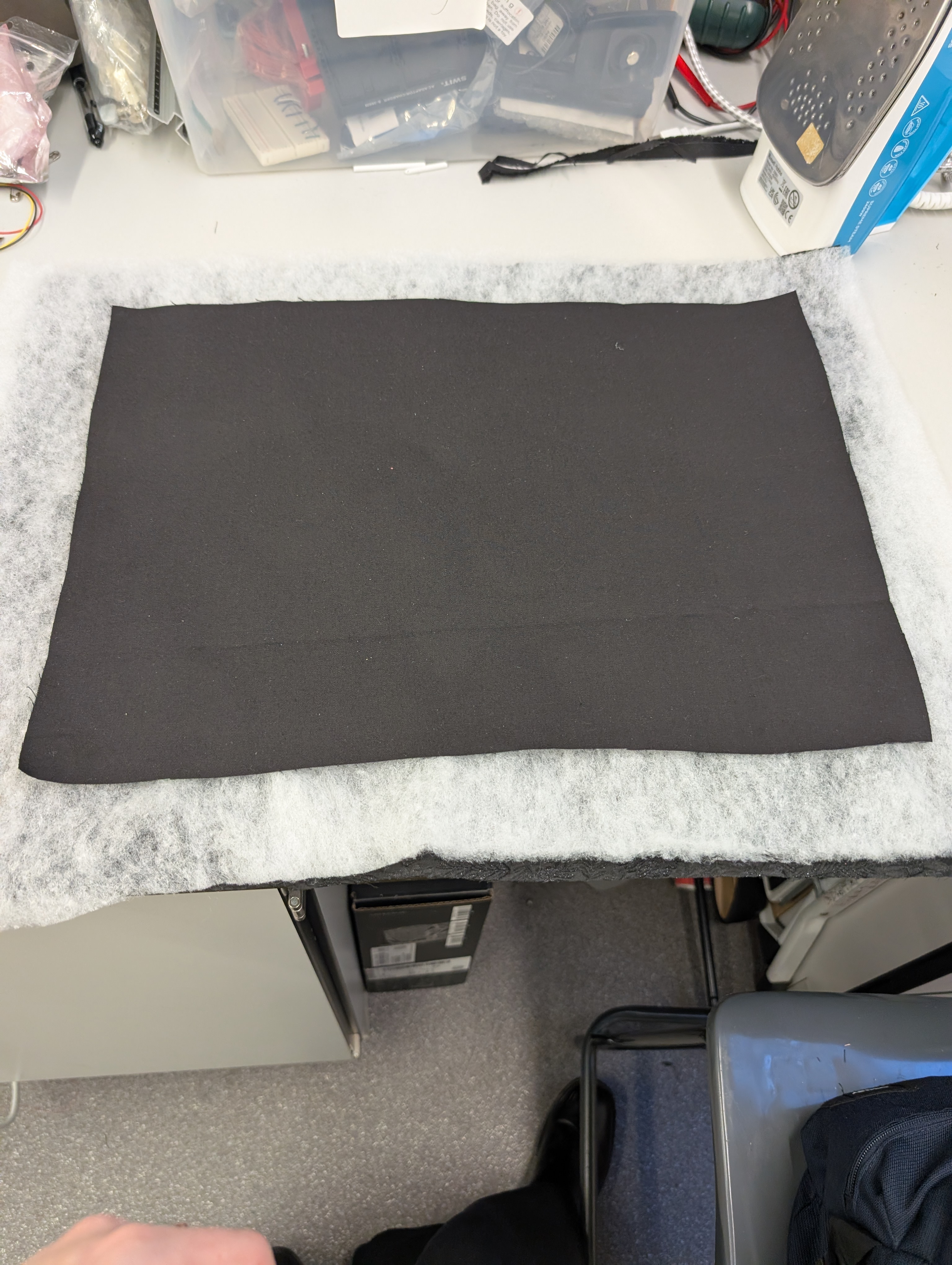
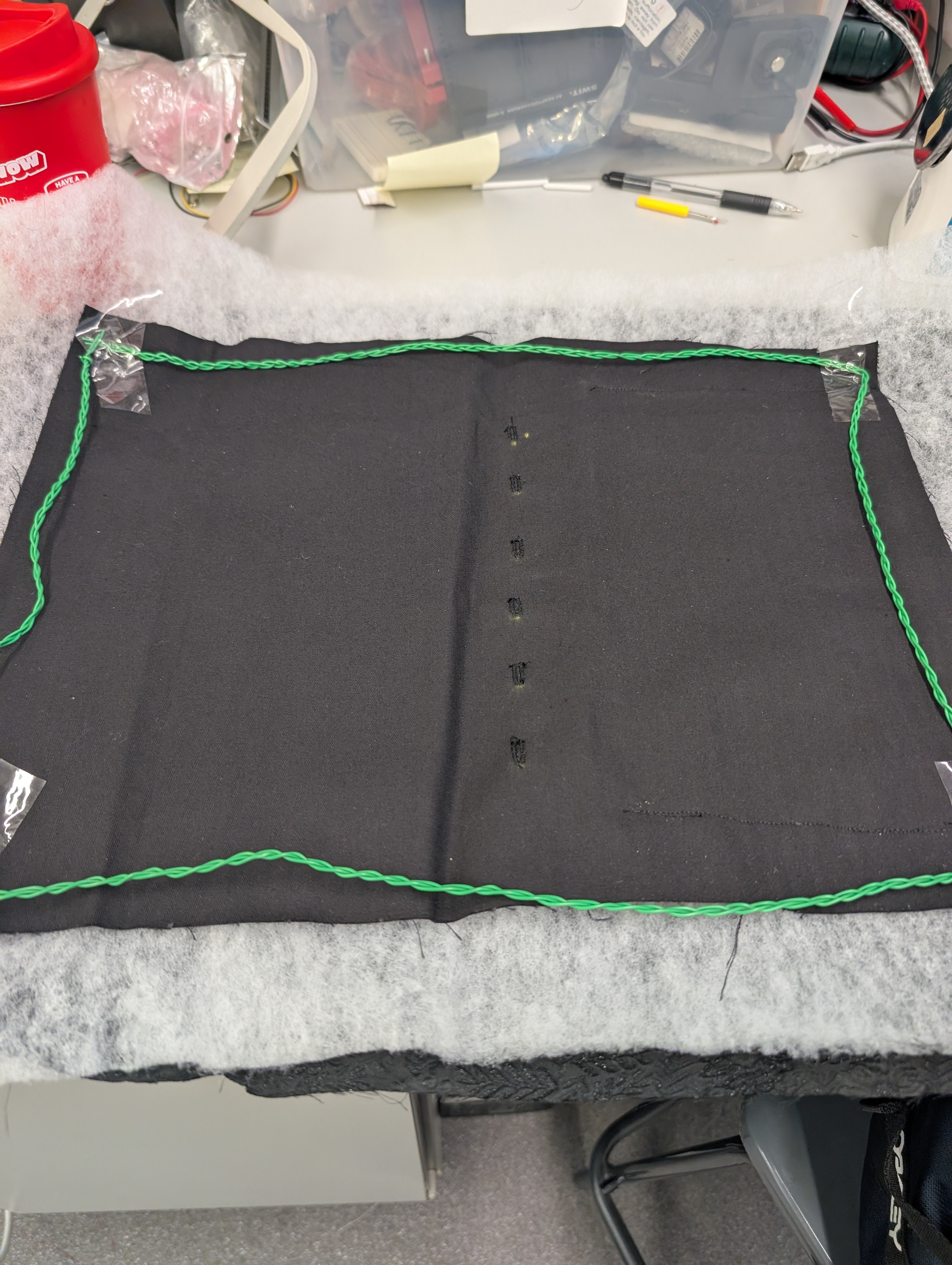
The Gallery below contains images from the process of creating the Sounds of the Library as well as the final performance on 8/12/2025. Credit for photography goes to Avynne Trembly, Tug Fergus O’Flaherty, and Shuoyang.
Citations
Citations
Alessia Milo (2017). AURAL FABRIC: GREENWICH. [online] YouTube. Available at: https://www.youtube.com/watch?v=9XZ_ByjULBk [Accessed 29 Oct. 2025]
Batini, F., & Toti, G. (2024). Shared reading aloud to enhance language and literacy. Education 3-13, 52(7), 946–962. https://doi.org/10.1080/03004279.2024.2357055
Bela.io. (2020). Pure Data and Bela – The Bela Knowledge Base. [online] Available at: https://learn.bela.io/tutorials/pure-data/fundamentals/course-introduction/ [Accessed 5 Nov. 2025].
Bela Platform (2020). Fabric Interfaces Tutorial: E-Textiles, Conductive Thread and Trill Craft. [online] YouTube. Available at: https://www.youtube.com/watch?v=ClBYyYEFkF0 [Accessed 19 Nov. 2025].
Brother UK. (2017). User Manuals & Guides | Brother UK. [online] Available at: https://www.brother.co.uk/support/manuals [Accessed 20 Oct. 2025].
Brown, A.R. (2020). QCGInteractiveMusic. [online] YouTube. Available at: https://www.youtube.com/channel/UCtQVQIgKdxGTpM1ynAPIwyg [Accessed 20 Nov. 2025].
Electrical and Computer Engineering at Michigan (2015). Live Writing: Reflections – W15 Michigan Mobile Phone Ensemble Performance. [online] YouTube. Available at: https://www.youtube.com/watch?v=1WRn2LNV9yw [Accessed 1 Nov. 2025].
Kate Bosen, and Dan Overholt. 2024. Stitch: a Knitting-powered Musical Interface using Computer Vision. Proceedings of the International Conference on New Interfaces for Musical Expression. DOI: 10.5281/zenodo.13904888 [PDF]
Nathan Renney, and Benedict Gaster. 2024. Insights Into How Digital Luthiers Approach Design. Proceedings of the International Conference on New Interfaces for Musical Expression. DOI: 10.5281/zenodo.13904935 [PDF]
OleensEmbroidery (2015). PE Design 10. Removing jumps/trims in text (lesson 14). [online] YouTube. Available at: https://www.youtube.com/watch?v=mRFQfIaLoHY [Accessed 26 Nov. 2025].
Pd.iem.sh. (2025). List of objects | Pure Data. [online] Available at: https://pd.iem.sh/objects/.
Satomi, M. and Perner-Wilson, H. (2020). HOW TO GET WHAT YOU WANT. [online] Kobakant.at. Available at: https://www.kobakant.at/DIY/?p=6730 [Accessed 24 Oct. 2025].
Wolfe, J. (2019). Note names, MIDI numbers and frequencies. [online] Unsw.edu.au. Available at: https://newt.phys.unsw.edu.au/jw/notes.html [Accessed 1 Nov. 2025].
Won Lee, S., Essl, G. and Martinez, M. (2016). Live Writing: Writing as a Real-time Audiovisual Performance. [online] Available at: https://www.nime.org/proceedings/2016/nime2016_paper0043.pdf [Accessed 1 Nov. 2025].
 Avynne Trembly